Course contents
- 01The main incoterms a merchandiser meets and who pays for what under each one
- 02Booking a shipment with a freight forwarder and confirming a sailing date
- 03Full container load versus less than container load and choosing between them
- 04Tracking a shipment from factory gate to port and reading a bill of lading's status
- 05Building a complete shipment tracker from booking to arrival
The main incoterms a merchandiser meets and who pays for what under each one
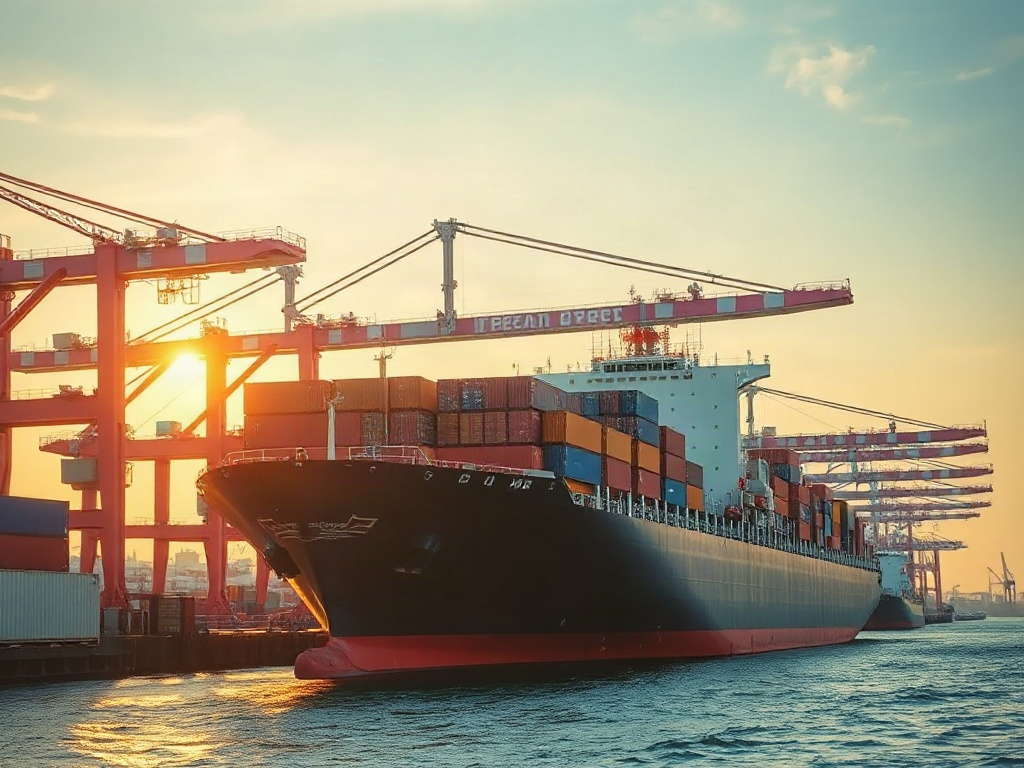
This page names the main incoterms a merchandiser meets on an export order, and explains what each one makes the factory pay for and what it makes the buyer pay for
This page is for a merchandiser or shipping clerk at a garment factory, or a buyer's own merchandiser, who must know which incoterm a quotation or a purchase order is written under, and what that one term actually decides: who pays for freight, who pays for insurance, who pays import duty, and at which exact point the goods become the buyer's own risk. This is chiefly a money-flow skill: reading three letters on a purchase order and knowing, without asking anyone, which costs already sit inside the quoted price and which costs still have to be added. Without this skill, a factory can quote a price that looks competitive on paper but secretly leaves out a cost it was actually supposed to carry, or a buyer's merchandiser can build a landed-cost estimate that is wrong because it double-counts a cost the factory already paid for.
You need: no previous lesson. A basic sense of how an export order is quoted and confirmed is useful but not required.
By the end of this lesson you can:
- name the four incoterms a garment merchandiser meets most often, and state what each one covers;
- explain the one moment in a shipment's life where risk passes from seller to buyer, for each of these incoterms;
- read a purchase order's incoterm and state, without checking anything else, who pays for sea freight and who pays for duty;
- tell an incoterm's effect on the FOB price apart from its effect on who carries the risk.
Not covered here: how to book a shipment with a freight forwarder (Lesson 2), how to choose between a full container and a shared container (Lesson 3), and how to read a bill of lading's own status (Lesson 4).
Words you will meet in this lesson
| Term | Meaning |
|---|---|
| Incoterm | A short, standardised international trade term that fixes which costs and risks the seller carries and which ones the buyer carries, at a named point in the shipment. |
| EXW (ex works) | The seller's own factory gate is the handover point; the buyer arranges and pays for every stage of transport from there. |
| CIF (cost, insurance and freight) | The seller pays the sea freight and the marine insurance to the buyer's named port, but risk still passes to the buyer once the goods are loaded on board. |
| DDP (delivered duty paid) | The seller pays and arranges everything, including import duty, all the way to the buyer's own named address. |
| Risk transfer point | The exact moment in a shipment's life where responsibility for loss or damage moves from the seller to the buyer, fixed by the incoterm in use. |
| Freight forwarder | A company that arranges the shipping and paperwork for moving goods from factory to buyer. |
An incoterm fixes, for one named point in a shipment, which costs the seller has already paid inside its price and which costs the buyer must still add, and it fixes exactly where risk of loss passes from seller to buyer
An incoterm is a short, standardised term, published by the International Chamber of Commerce and used the same way by exporters and importers worldwide, that fixes two things for a single named point in a shipment: which costs the seller has already carried inside its quoted price, and where responsibility for the goods passes from seller to buyer. An incoterm is not a shipping method, and it does not decide whether the goods travel by sea or by air; a shipment can go by sea under FOB or by air under the same FOB rule. What an incoterm decides is the split of cost and risk between the two named parties, at a fixed point that both sides agree to before the order is confirmed.
The same four incoterms apply to almost every order, but which one an order is actually quoted under, and how far the seller's own cost reaches, differs by buyer, market and product
| What can differ | The shapes you meet | Why it matters |
|---|---|---|
| Export order vs. domestic order | An export order such as Order A is typically quoted under an incoterm such as FOB, since it crosses a border and needs a fixed international handover point; a domestic Make to Stock order such as one of Cedar & Co.'s own styles usually needs no incoterm at all, since delivery terms are simply agreed locally. | Asking a domestic buyer to agree an incoterm it has no use for wastes time on a term that only matters once a shipment crosses a border. |
| Make to Order vs. Make to Stock | A Make to Order export order like Order A is quoted and confirmed with its incoterm fixed before production starts, since the buyer needs to know its own landed cost before committing; a Make to Stock domestic run has no separate buyer to quote an incoterm to, since the brand is both the maker and the seller of its own stock. | Treating a Make to Stock run as if it needed an incoterm the way an MTO export order does adds a step that has no real counterpart to agree it with. |
| FOB vs. CIF from the same factory | Delta Garments can quote Order A FOB, its own port, or CIF, Northline Apparel's own named port, for the same order; the CIF price is simply the FOB price plus the sea freight and insurance the factory now pays and adds to its invoice. | Comparing an FOB quotation from one factory against a CIF quotation from another without adjusting for freight makes the CIF factory look more expensive than it actually is once freight is added back to the FOB number. |
| A buyer that wants EXW vs. a buyer that wants DDP | A large buyer with its own freight-buying power, such as Northline Apparel, often prefers FOB or even EXW so it can book its own freight contracts at its own negotiated rate; a smaller or first-time buyer sometimes prefers DDP so it never has to arrange shipping or customs itself. | Quoting DDP to a buyer that actually wanted FOB, or the reverse, means the factory either carries costs it was never asked to carry or hands the buyer a price that looks incomplete. |
| Socks, terry, and home-textile product families | A hosiery, terry, or bedding export order uses the same four incoterms, with the same fixed handover points; only the product inside the container changes, not which incoterm applies or what it covers. | The incoterm rules do not change by product family; a merchandiser moving from T-shirts to towels still reads the same three or four letters the same way. |
Northline Apparel asks Delta Garments to quote Order A both FOB and CIF, and Mona has to show what changes in the price and what does not
Northline Apparel asks Delta Garments to quote Order A, 15,000 pieces of a basic cotton T-shirt, under two incoterms: FOB, Delta Garments' own port, and CIF, Northline Apparel's own named port. Mona, the merchandiser at Delta Garments, already has Order A's own fixed FOB price of USD 3.20 per piece. Her task is to show Sara, the buyer at Northline Apparel, exactly what CIF adds to that price, and to confirm that nothing about the garment itself, its fabric, its making cost, or its profit, changes between the two quotations. Only the freight and insurance line changes; everything Delta Garments already builds into its FOB price stays the same under either incoterm.
The worked numberOrder A's CIF price is its own fixed FOB price plus sea freight and insurance, with every step shown
FOB price (fixed, section 7 figures): USD 3.20 per piece
Illustrative sea freight to Northline Apparel's named port: USD 0.30 per piece
Illustrative marine insurance: USD 0.04 per piece
Freight and insurance together: 0.30 + 0.04 = USD 0.34 per piece
CIF price: 3.20 + 0.34 = USD 3.54 per piece
Whole order at FOB: 15,000 × 3.20 = USD 48,000
Freight and insurance for the whole order: 15,000 × 0.34 = USD 5,100
Whole order at CIF: 48,000 + 5,100 = USD 53,100, the same total as 15,000 × 3.54
The freight and insurance figures above are illustrative, since actual freight rates change by route, season and carrier; what stays fixed is the method, FOB price plus freight plus insurance equals CIF price, and the fact that the garment's own cost build-up, fabric, trims, making, overhead and profit, is identical under both incoterms.
The methodA four-step method for reading any purchase order's incoterm before quoting or accepting a price
- Find the three-letter incoterm written on the purchase order or quotation, such as FOB, CIF, EXW or DDP.
- Name the exact point where risk passes from seller to buyer under that incoterm, using the standard definition, not a guess.
- List every cost the quoted price already includes up to that risk-transfer point.
- List every cost the other side must still add from that point onward, such as freight, insurance or duty.
A common mistake is assuming FOB and CIF quote the same price for the same garment
A common mistake, when a buyer compares two quotations from different factories, is assuming that an FOB quotation and a CIF quotation for the same garment should carry the same number, and treating a higher CIF number as proof that a factory is more expensive. An FOB price and a CIF price are never meant to match, because CIF already carries freight and insurance costs that an FOB price leaves for the buyer to add separately. Comparing them without adjusting for freight makes a perfectly competitive FOB factory look expensive next to a CIF quotation, or a CIF factory look cheap next to an FOB quotation that still needs freight added on top.
An incoterm is a short, standard trade term that fixes two things: which shipping costs the factory has already paid for inside its price, and the exact point where the goods become the buyer's own risk. Under EXW, the buyer takes over at the factory's own gate and pays for everything after that. Under FOB, the factory pays to get the goods on board the ship at its own port, and the buyer pays for everything from there. Under CIF, the factory also pays the sea freight and insurance to the buyer's own port, but the goods are still the buyer's risk once loaded. Under DDP, the factory pays and arranges everything, all the way to the buyer's own address, including duty. The same order can be quoted under any of these terms; what changes is only which costs sit inside the price and where responsibility passes from one side to the other.
- An incoterm fixes cost and risk at one named point in a shipment; it does not decide whether goods travel by sea or by air.
- EXW hands over at the factory's own gate; FOB hands over once goods are on board the ship at the seller's own port.
- CIF adds sea freight and insurance to the FOB price but still passes risk to the buyer once goods are on board.
- DDP is the only one of these four where the seller pays even the import duty, all the way to the buyer's own address.
- A CIF price is always higher than the matching FOB price for the same order, by the amount of freight and insurance added.
- A domestic Make to Stock order usually needs no incoterm at all.
- The same four incoterms apply across product families; only the product inside the container changes.
Sara at Northline Apparel emails Delta Garments asking why the CIF quotation for Order A is USD 5,100 higher than the FOB quotation for the same order
Sara at Northline Apparel emails Delta Garments after receiving both quotations for Order A on the same day.
- The FOB quotation, Delta Garments' own port, totals USD 48,000 for 15,000 pieces.
- The CIF quotation, Northline Apparel's own named port, totals USD 53,100 for the same 15,000 pieces.
- Sara's email asks whether Delta Garments has quietly raised its own making cost or profit for the CIF version.
- Mona must reply the same day with a breakdown that shows exactly what the USD 5,100 covers.
The relevant line from Sara's own email:
Has Delta Garments raised its own cost or profit on the CIF quotation? Decide before you open the decision.
Show decision
No. The whole USD 5,100 difference is Order A's own illustrative freight and insurance, 15,000 pieces at USD 0.34 each, added on top of the unchanged FOB price of USD 3.20 per piece. Delta Garments' own fabric, trims, making, overhead and profit are identical in both quotations.
The two facts that decide this are the rule that CIF equals FOB plus freight plus insurance with nothing else changed, and Order A's own fixed FOB price of USD 3.20 per piece, which appears unchanged inside both quotations. Mona replies with the same calc shown above, itemised freight and insurance separately from the garment's own cost build-up, so Sara can see that no hidden cost has been added.
The cost of a merchandiser misreading an incoterm, against the cost of the few minutes it takes to check one properly
Reading a purchase order's incoterm correctly, and building the right cost list from it, costs a few minutes at the quotation stage. The cost of misreading it shows up later: if Delta Garments quoted Order A CIF but Mona's own team books the shipment as if it were FOB, expecting Northline Apparel to arrange and pay the sea freight, the factory ends up paying a freight bill it already priced into its own quotation, and Northline Apparel receives a freight invoice it never expected, straining the relationship over a term that was written correctly on the order from the start. On a 15,000-piece order already worth USD 48,000 at FOB, an unbudgeted USD 5,100 freight bill wrongly billed to the wrong side is more than 10% of the order's own FOB value, all from misreading three letters on a purchase order.
Shipment tracker: the columns this lesson fills
This course's shipment tracker is the tool this lesson starts building: one row per shipment, its incoterm, and what that incoterm means each side must pay. This lesson fills the order, the incoterm, and the cost split; later lessons in this course add the booking, the container type, and the tracking status. [Download the tracker](templates/T14-C01-shipment-tracker.xlsx).
| Order | Incoterm | Who pays freight | Who pays duty |
|---|---|---|---|
| Order A, FOB quotation | FOB (Delta Garments' own port) | Northline Apparel | Northline Apparel |
| Order A, CIF quotation | CIF (Northline Apparel's own named port) | Delta Garments (added to price) | Northline Apparel |
| Order A, illustrative DDP quotation | DDP (Northline Apparel's own named address) | Delta Garments (added to price) | Delta Garments (added to price) |
1. Under which of these four incoterms does the seller's own responsibility reach the furthest, all the way to the buyer's own named address, including import duty?
2. A factory quotes an order CIF at USD 4.10 per piece. Its own FOB price for the same order is USD 3.70 per piece. What does the USD 0.40 difference represent?
| EN | AR | FR | TR | Meaning |
|---|---|---|---|---|
| Incoterm | إنكوترمز | Incoterm | Incoterm | A short, standardised international trade term that fixes which costs and risks the seller carries and which ones the buyer carries, at a named point in the shipment. |
| EXW (ex works) | تسليم من المصنع | EXW (départ usine) | EXW (fabrika teslim) | The seller's own factory gate is the handover point; the buyer arranges and pays for every stage of transport from there. |
| CIF (cost, insurance and freight) | التكلفة والتأمين والشحن | CIF (coût, assurance et fret) | CIF (mal bedeli, sigorta ve navlun) | The seller pays the sea freight and the marine insurance to the buyer's named port, but risk still passes to the buyer once the goods are loaded on board. |
| DDP (delivered duty paid) | التسليم مع دفع الرسوم الجمركية | DDP (rendu droits acquittés) | DDP (gümrük vergisi ödenmiş teslim) | The seller pays and arranges everything, including import duty, all the way to the buyer's own named address. |
| Risk transfer point | نقطة انتقال المخاطر | Point de transfert du risque | Risk devir noktası | The exact moment in a shipment's life where responsibility for loss or damage moves from the seller to the buyer, fixed by the incoterm in use. |
| Freight forwarder | وكيل الشحن | Transitaire | Nakliye acentesi | A company that arranges the shipping and paperwork for moving goods from factory to buyer. |
Lesson 2: Booking a shipment with a freight forwarder and confirming a sailing date
Now that you can name the main incoterms and who pays for what under each one, the next lesson shows how to actually book a shipment with a freight forwarder once an order is ready to ship. Back to the course map